
 Save
Save
This bison tartare is perfect for home cooks looking to impress with minimal fuss. It brings a fresh, elegant dish to your table in just 15 minutes using simple, standout ingredients. Whether you want a fancy appetizer or a light main course, this recipe delivers bold flavor and a special touch without needing a chef’s skills.
I first made this after discovering bison at a local market. It quickly became a favorite for weekend dinners where everyone asks for seconds.
Ingredients
- Bison loin: provides lean protein with a subtle gamey flavor. Pick a fresh cut with a bright color and firm texture.
- Shallots: offer mild sharpness and a little sweetness that sharpens the palate. Look for firm bulbs without spots.
- Capers: add a briny punch that lifts the dish—choose small capers in salt or vinegar for better taste.
- Whole grain mustard: brings texture and tang, so find one with visible mustard seeds.
- Parsley: adds a fresh, herbaceous note that balances the meat’s richness. Flat leaf parsley tends to be more flavorful.
- Lemon juice and zest: brighten the mixture with acidity and aroma. Use a fresh lemon for best results.
- Quail eggs: are small and delicate, making them perfect for an elegant garnish; ensure they are fresh with smooth shells.
- Salt and freshly ground black pepper: are essential for seasoning. Use freshly cracked pepper for the best aroma.
Instructions
- Build The Base:
- Trim all the fat off the bison loin to ensure a clean, tender texture. Chop the meat into small, even pieces by hand with a sharp knife. Place the chopped bison in a large mixing bowl. This is important to avoid a mushy texture and to respect the tartare’s classic presentation.
- Add Aromatics and Flavor:
- Finely chop the shallot and capers then add them to the bowl. Add the chopped parsley along with whole grain mustard, lemon zest, and juice. Sprinkle salt and a few cracks of black pepper over the mixture. These ingredients add brightness, tang, and complexity to the raw meat.
- Incorporate Eggs Gently:
- Separate the quail egg yolks from the whites carefully. Add yolks from two eggs into the bowl and reserve one yolk for decoration. Gently fold the mixture using a spatula ensuring the ingredients are combined but not overmixed. Overmixing can cause the meat to lose its delicate texture.
- Shape and Plate:
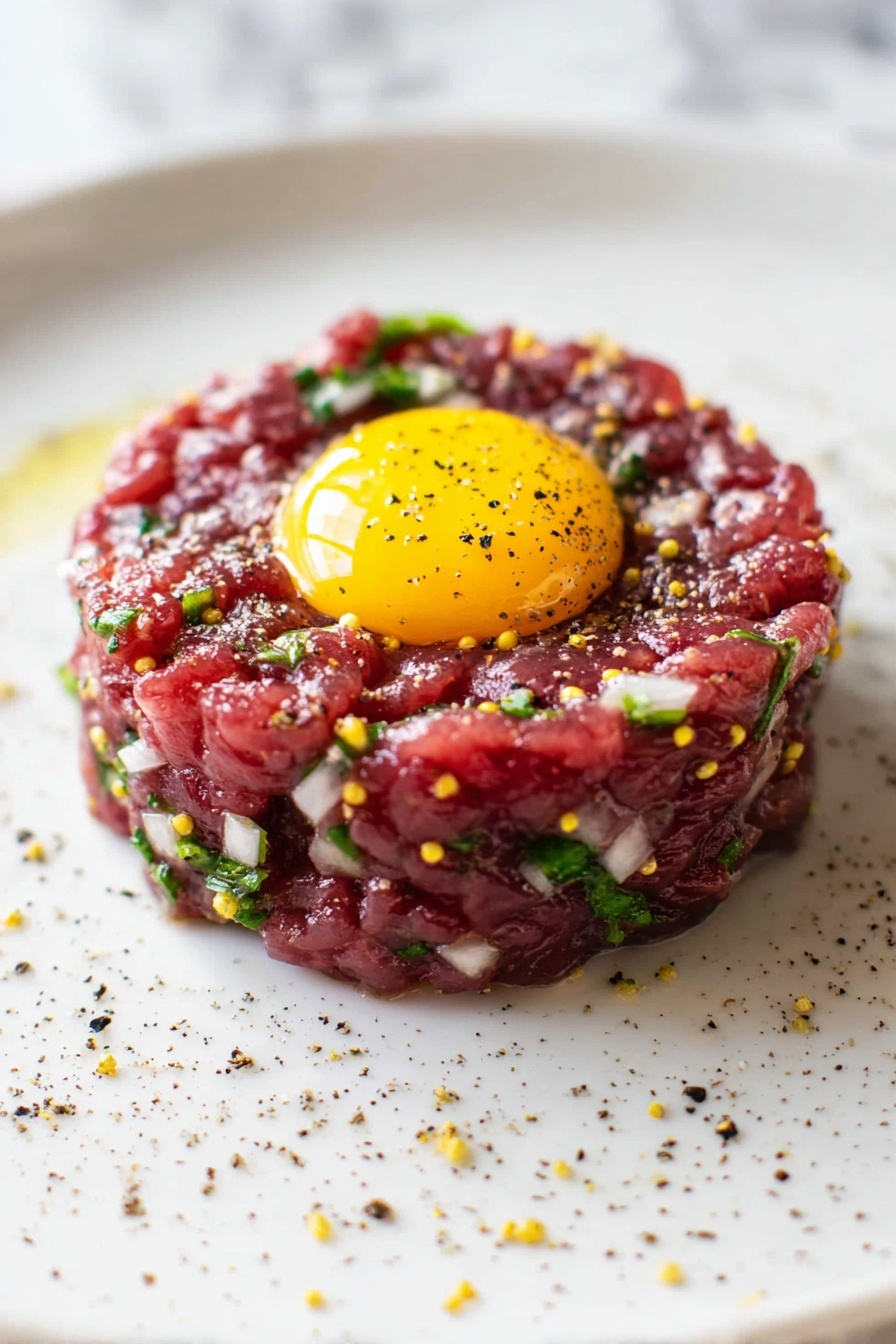
- Place a round mold on a clean plate and fill it with the tartare mixture. Press down gently to pack it evenly but avoid compressing too much to keep the texture light. Carefully lift the mold away. Crack the remaining quail egg and place the yolk on top of the tartare for an elegant finishing touch.
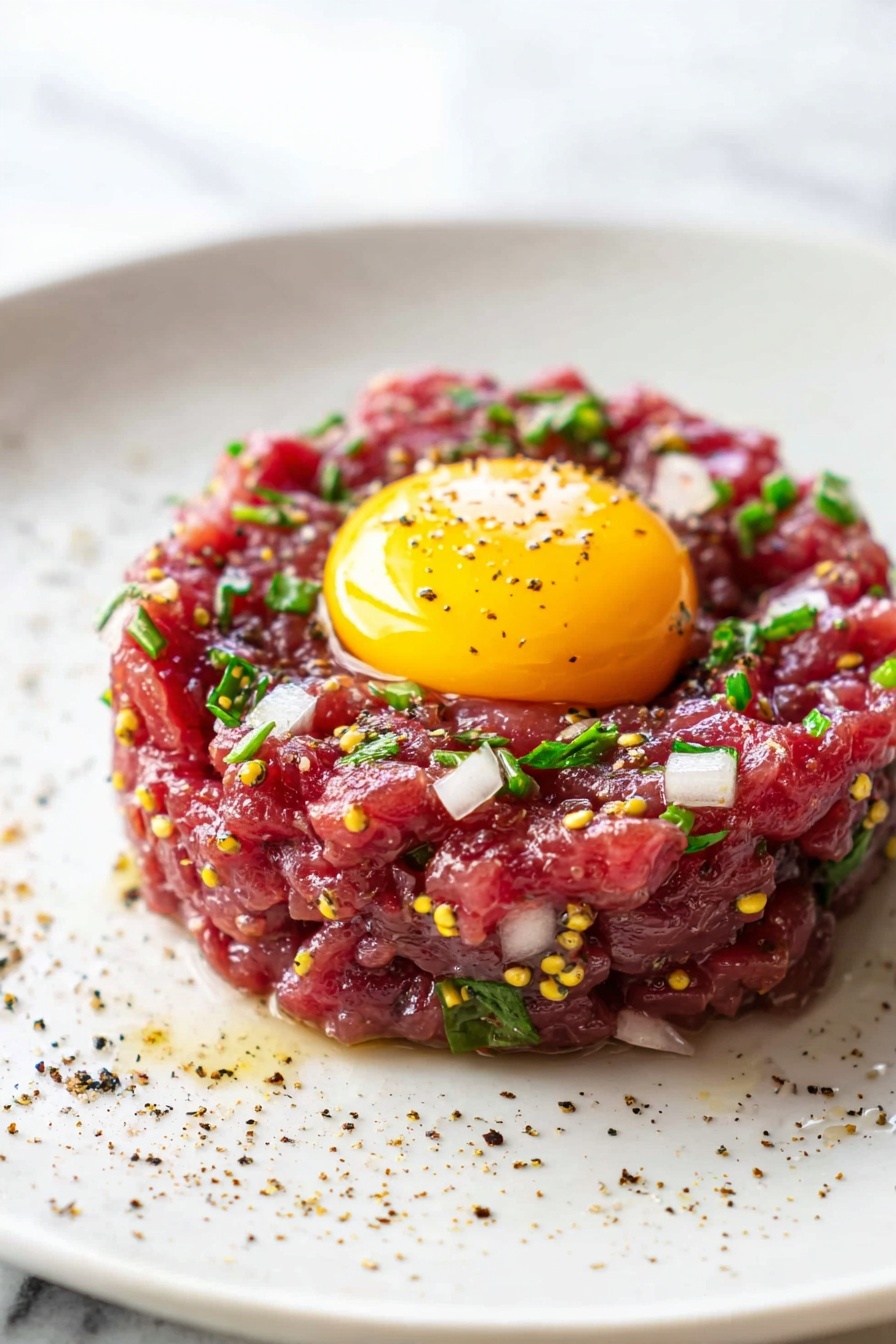
My favorite part is the fresh lemon zest that gives just the right zing to the tartare. This recipe often reminds me of a cozy dinner with close friends where the conversation flowed as easily as the first bites. Every time I make it those bright flavors take me right back to that evening.
Storage tips
Store leftover tartare in an airtight container and keep chilled. Use within 24 hours for safety and freshness. Avoid mixing in the egg yolk until serving to keep the texture intact.
Ingredient swaps
Ground beef can replace bison if unavailable but will be less lean and gamey. Shallots can be swapped with finely minced red onion though flavor is sharper. Regular chicken eggs can substitute quail eggs but may visually overpower the dish.
Serving ideas
Serve with toasted baguette slices for crunch. Add microgreens or arugula around the plate for freshness. A light drizzle of aged balsamic vinegar complements the tartare’s sharpness.
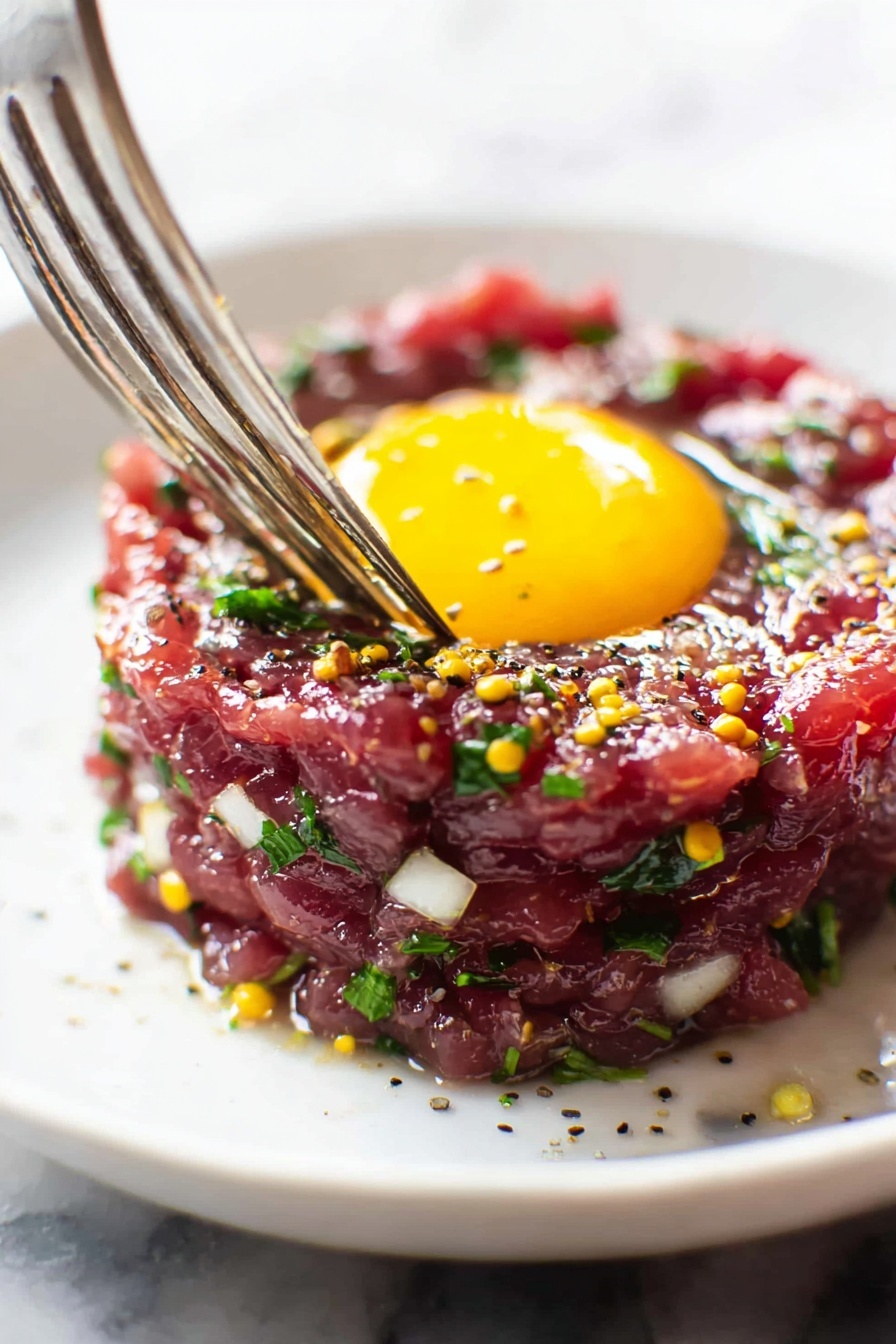
Toasting spices or adding more aromatics can be fun experiments, but this recipe is lovely in its simplest form.
Frequently Asked Recipe Questions
- → What cut of bison is best for this dish?
Bison loin is preferred for its tenderness and mild flavor, making it ideal for finely chopping and blending with fresh ingredients.
- → How should the bison be cut for optimal texture?
Chop the bison into very small pieces by hand to maintain a firm yet tender texture in the final mix.
- → Why use quail eggs instead of chicken eggs?
Quail eggs contribute a richer flavor and an elegant presentation, complementing the delicate meat and other fresh components.
- → What role does the lemon zest and juice play here?
Lemon zest and juice add brightness and a subtle tang that balance the richness of the meat and eggs.
- → How important is gentle mixing in this preparation?
Mixing gently preserves the texture of the finely chopped meat, ensuring the dish remains tender and cohesive without becoming mushy.
- → Can capers be omitted or substituted?
Capers add a slight briny tang, but they are optional; mild green olives or finely chopped pickles can be used as a substitute to maintain the flavor balance.