
 Save
Save
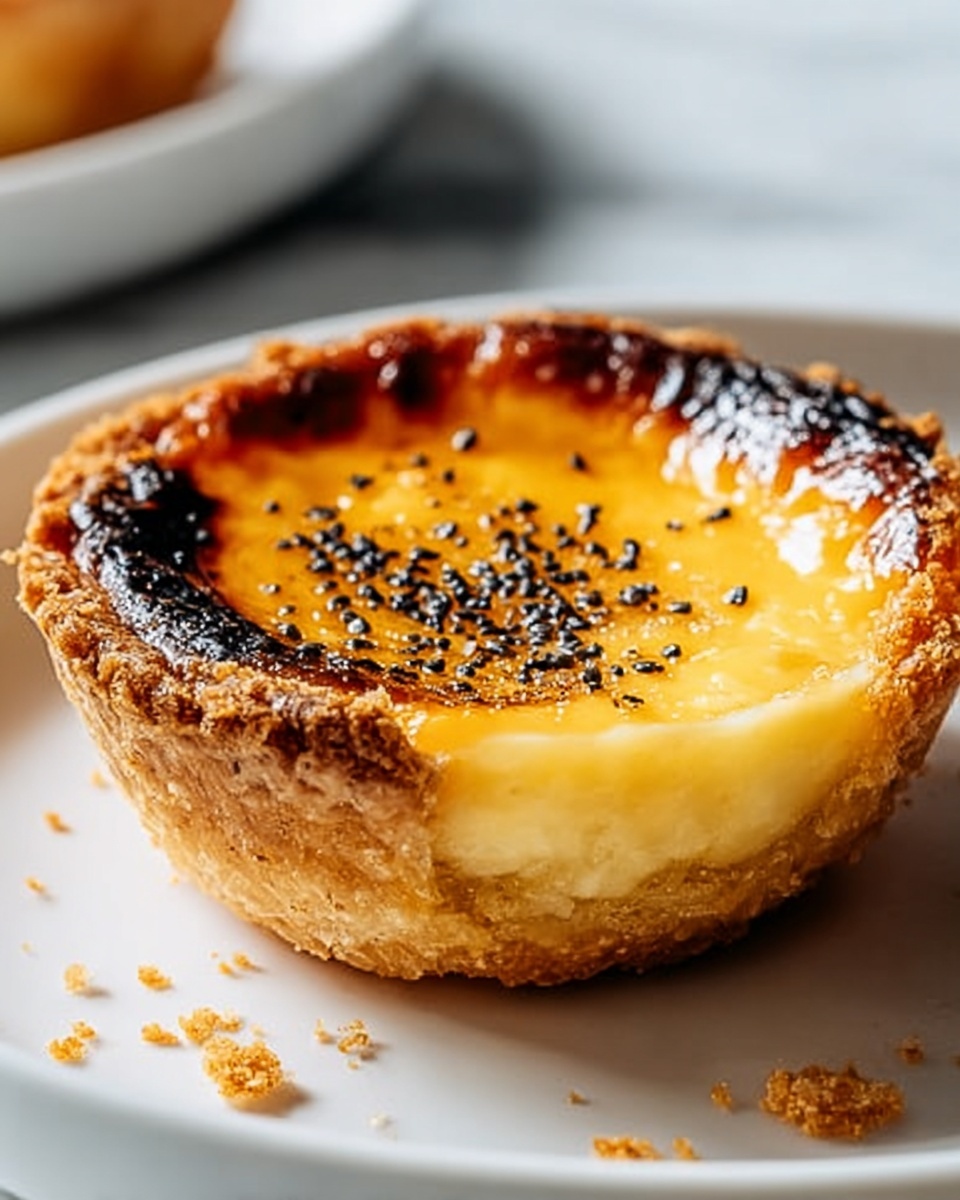
Pastel de Nata is the perfect treat when you want something buttery and sweet with a rich egg custard filling. These tarts bring a bit of Portugal into your kitchen without complicated steps or hard-to-find ingredients. The balance of flaky pastry and silky custard has made it our favorite indulgence for weekend breakfasts or a special afternoon snack.
I first tried making these after craving something classic and comforting. It quickly became a family favorite, especially when shared with a cup of coffee.
Ingredients
- Frozen puff pastry: works for a flaky, buttery base. Thaw it slowly for best texture.
- Granulated sugar: for sweetness that caramelizes beautifully in the oven.
- All-purpose flour: helps thicken the custard without adding heaviness.
- Whole milk: for rich creaminess avoid low-fat options for best flavor.
- A cinnamon stick: lends delicate warmth that complements the zest.
- Lemon peel: adds bright citrus notes without overpowering the custard.
- Egg yolks: create the custard’s silky texture and golden color. Use fresh large yolks for richness.
Instructions
- Roll and Slice Dough:
- Roll out your thawed puff pastry on a lightly floured surface. Roll it tightly from one short end to the other just like a jelly roll. Slice into twelve equal pieces to ensure even tarts.
- Shape Pastry Cups:
- Place each piece cut-side down into a muffin tin cup. Press and stretch the dough with your thumbs so it lines the base and sides evenly. This creates the flaky shell that holds the custard.
- Prepare Custard Base:
- In a saucepan whisk together sugar, flour, and a small amount of milk until smooth. Add the rest of the milk, cinnamon stick, and lemon peel. Cook over medium heat whisking constantly until it starts to simmer and thicken gently. This ensures there are no lumps and builds flavor.
- Infuse and Cool:
- Remove the pot from heat and let the custard steep for ten minutes. This step allows the cinnamon and lemon aroma to fully develop.
- Combine Egg Yolks:
- Whisk egg yolks separately. Remove cinnamon and lemon from the custard mixture. Slowly whisk warm milk mixture into yolks to prevent cooking them. Straining the custard through a fine sieve creates a silky smooth filling.
- Preheat Oven:
- Set oven as high as it safely goes ideally around 500 degrees Fahrenheit or 260 degrees Celsius. This high heat is what creates the classic caramelized blistered tops.
- Fill and Bake:
- Pour custard into the pastry cups filling about three quarters full. Bake for 12 to 15 minutes until the custard puffs and begins to brown with some dark spots. Those slight charred bits are traditional so do not worry.
- Cool and Serve:
- Let the tarts rest in the tin for five minutes then transfer to a wire rack. This helps the custard to set for perfect slices.
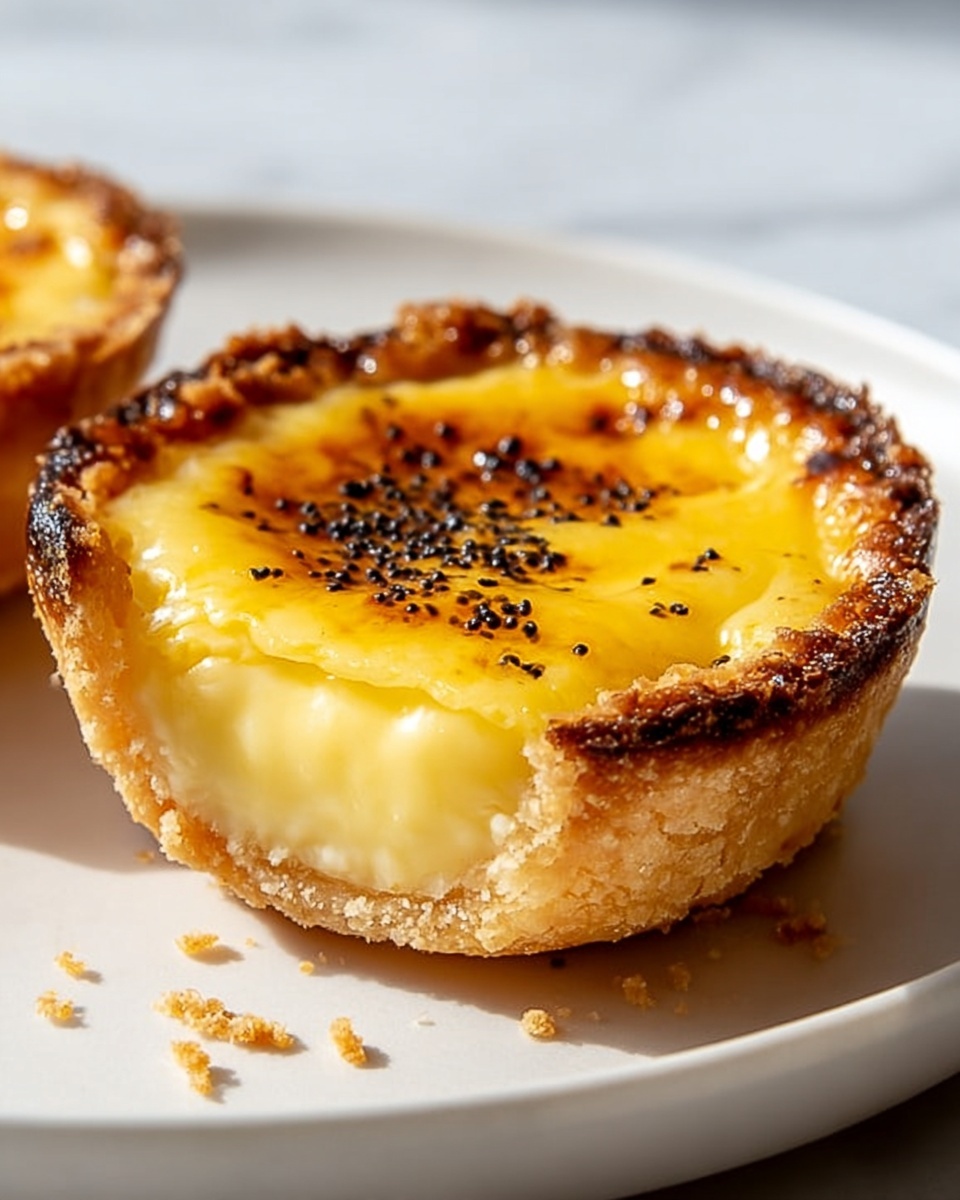
The crispy caramelized edges of the custard combined with the flaky crust are why I always keep puff pastry stocked in my freezer. Baking them reminds me of cozy family weekends sharing stories over coffee and sweet bites.
Storage Tips
Store leftover Pastel de Nata in an airtight container at room temperature for up to two days. Reheat in a warm oven for five minutes to restore the crisp pastry.
Ingredient Swaps
You can substitute the lemon peel with orange peel for a sweeter citrus twist. Using half and half instead of whole milk makes the custard richer but heavier.
Serving Ideas
Serve warm with a dusting of cinnamon sugar or with fresh berries for a delightful contrast. They also pair wonderfully with espresso or a bold black tea.

Enjoy the process and the wonderful aroma filling your kitchen as these golden tarts bake.
Frequently Asked Recipe Questions
- → What type of pastry is best for making these tarts?
Use frozen puff pastry sheet, thawed, for a flaky and buttery base that crisps beautifully during baking.
- → How important is the high oven temperature?
Very important; the high heat creates the signature blistered tops and caramelizes the custard surface for authentic flavor and texture.
- → Can I prepare the custard filling ahead of time?
Yes, you can cook and strain the custard in advance and refrigerate it; just bring it back to room temperature before pouring into the pastry.
- → Why do the custard tops develop dark spots?
These small charred spots result from caramelization at high heat and are a traditional hallmark rather than burn marks.
- → How do I prevent the pastry from becoming soggy?
Press and stretch the puff pastry evenly within the tin to form a sturdy shell and avoid overfilling with custard to prevent spillage during baking.