
 Save
Save
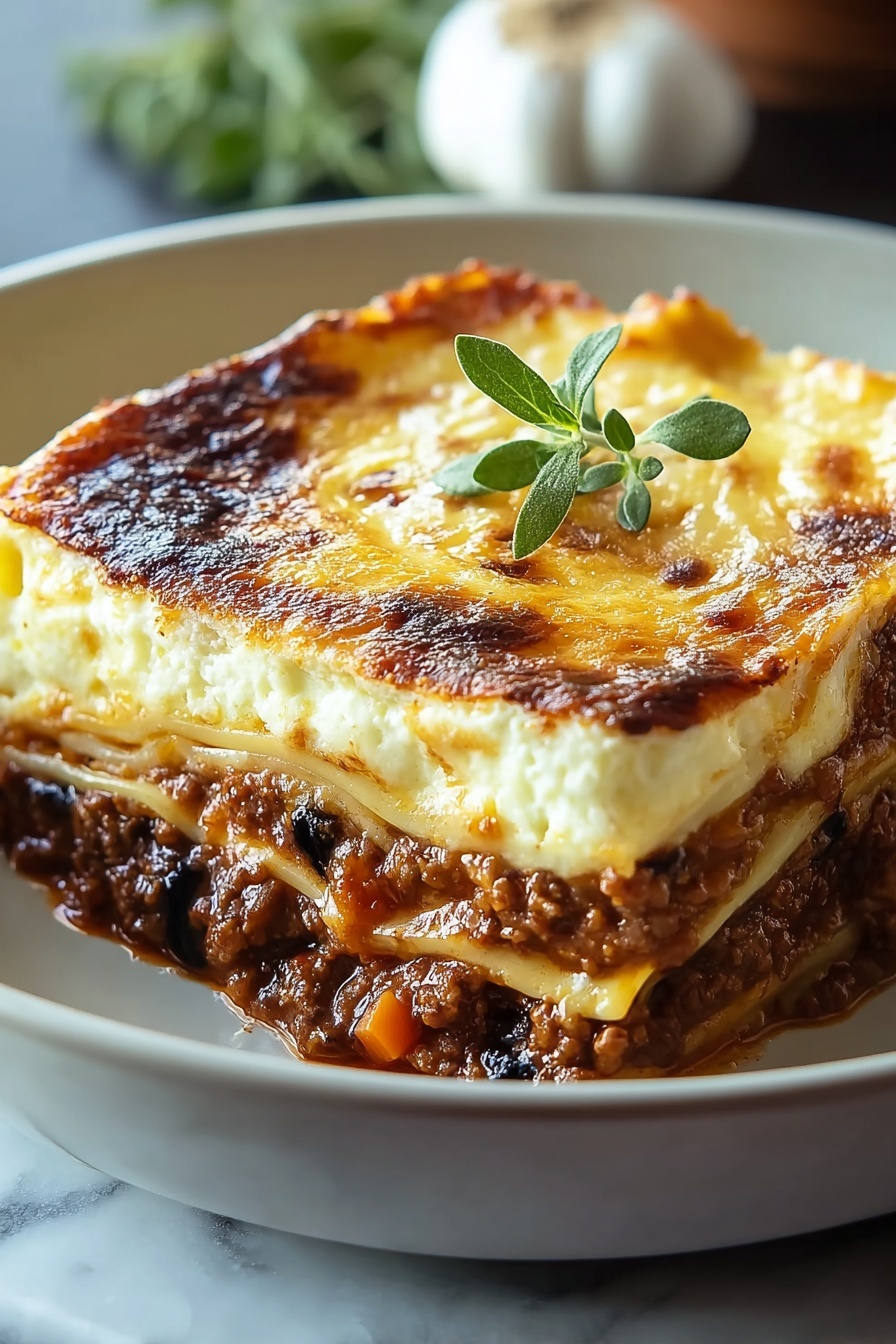
This Greek moussaka is a hearty layered casserole that transforms humble vegetables and beef into a rich, comforting dish. It’s perfect for family dinners or when you want to impress guests with traditional Mediterranean flavors without much fuss.
I first made this after being inspired by a trip to Greece. It quickly became a weekend favorite in my home that everyone looks forward to.
Ingredients
- Olive oil: for frying the vegetables and cooking the meat adds robust flavor. Use extra virgin for the meat sauce and a lighter oil if you prefer for frying
- Potatoes zucchini and eggplants: sliced into uniform disks ensure even cooking and layering. Choose firm fresh vegetables free from blemishes
- Kefalograviera cheese: finely shredded offers a sharp salty richness typical of Greek cuisine. Parmesan or kasseri are good substitutes if you can’t find it
- Salt and pepper: season the layers bringing out natural flavors
- Beef mince meat: delivers meaty body to the sauce. Seek quality fresh mince with good fat content
- Red wine: adds acidity and depth to the meat sauce. A dry red like merlot or cabernet works well
- Crushed canned tomatoes: create the tomato base for the sauce. Look for no added sugar or preservatives
- Spices: including cinnamon nutmeg thyme oregano and bay leaves impart warmth and complexity that make this more than just a meat casserole
- Fresh parsley: brightens and balances richer notes
- Butter flour and milk: make the luscious bechamel topping silky smooth and creamy
- Egg yolks: enrich the bechamel while nutmeg adds subtle aromatic spice
Instructions
- Build The Vegetable Base:
- Slice potatoes zucchini and eggplants into thin round disks about ¼ inch thick. Heating olive oil over medium-high heat carefully fry the slices until golden and cooked through. Remove and drain well on paper towels or a wire rack spread evenly so excess oil drains off. This step ensures the veggies layer without sogginess and gain a lovely texture.
- Cook The Meat Sauce:
- In a large pot over high heat warm olive oil and add finely chopped red onion and minced garlic. Cook until softened translucent but not browned to build base flavor. Add beef mince stirring frequently to break it up until browned through with no pink color. Pour in red wine allow it to simmer roughly three minutes until most liquid evaporates concentrating flavor. Stir in crushed tomatoes and the salt white pepper cinnamon nutmeg sugar thyme oregano bay leaves and fresh parsley. Bring to a simmer then reduce heat letting it gently bubble for about ten minutes to marry the spices and thicken the sauce.
- Prepare The Bechamel:
- In a separate saucepan melt unsalted butter over medium heat. Whisk in plain flour gradually to form a smooth roux paste cook briefly avoiding browning so it thickens slightly. Slowly whisk in milk little by little keeping motion steady to prevent any lumps forming. Cook stirring constantly until the sauce thickens into creamy smooth texture. Remove from heat then mix in egg yolks nutmeg and shredded Kefalograviera cheese. Return to heat briefly stirring until cheese melts and sauce bubbles gently. This adds richness and signature creamy topping.
- Assemble The Moussaka:
- Preheat oven to 165 degrees Celsius fan forced. Lightly oil a large baking dish. Begin layering by arranging potato slices in a single layer on the bottom seasoning lightly with salt and pepper then sprinkling some cheese. Next comes a layer of eggplant slices then zucchini slices and another layer of eggplants. Each layer should be seasoned and sprinkled with cheese making the dish flavorful throughout. Pour the prepared meat sauce evenly on top of the vegetables spreading with a spoon to cover the surface completely. Finally pour the bechamel sauce in an even layer over the meat sauce smoothing the top for an attractive finish.
- Bake And Rest:
- Place in the oven and bake for about 40 minutes checking after 30 minutes to avoid overcooking. The top should become beautifully golden brown. Remove the baking dish and allow the moussaka to cool and rest for at least 30 minutes before cutting. This rest helps the layers set for neat slices and develops deeper flavors. Discard bay leaves from the meat sauce before serving.
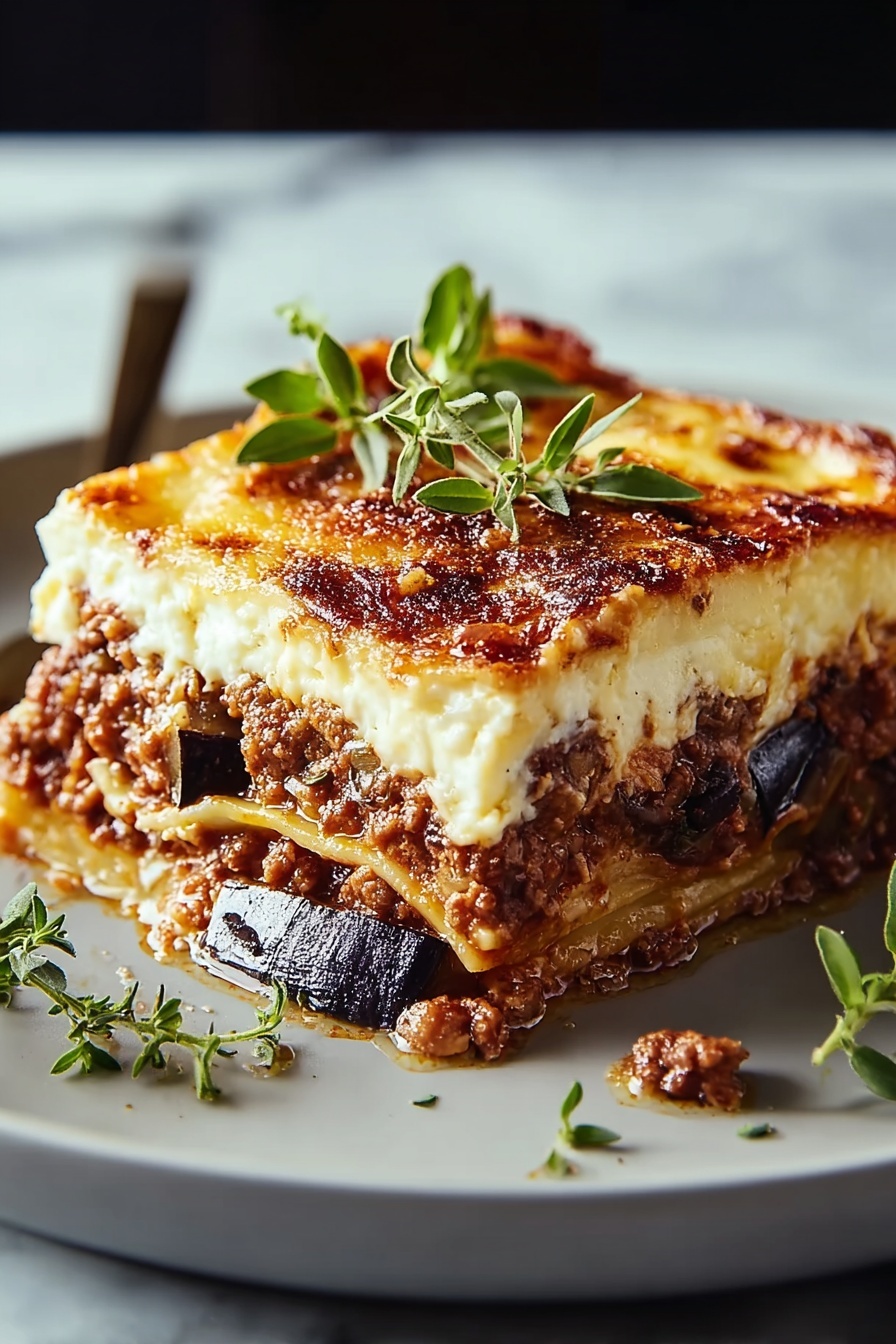
I love the way the spices like cinnamon and nutmeg sneak into the meat sauce giving it a warm cozy note. This dish always reminds me of family Sundays when my grandmother would make it slowly and patiently filling the house with irresistible aromas.
Storage Tips
Allow the moussaka to cool completely before covering and refrigerating. Stored in an airtight container it will keep well for up to three days. Reheat slices gently in the oven to preserve the crispy top and creamy bechamel. For longer storage you can freeze portions individually wrapped in foil and plastic wrap. Thaw overnight in the fridge to reheat carefully so the textures stay intact.
Ingredient Swaps
You can use lamb mince for a more traditional Greek taste or mix beef and lamb for balance. Swap zucchini and eggplants with mushrooms or sliced peppers if preferred. If you cannot find Kefalograviera cheese try parmesan but expect a slightly different flavor profile. For a dairy free version use olive oil or a plant-based butter substitute in the bechamel and omit the cheese or replace with a nut-based cream.
Serving Ideas
Serve moussaka warm with a light Greek salad of tomatoes cucumber red onion and olives dressed with lemon juice and olive oil. A side of crusty bread works well to sop up the juices. Pair with a glass of red wine that you used in the sauce to echo the flavors.
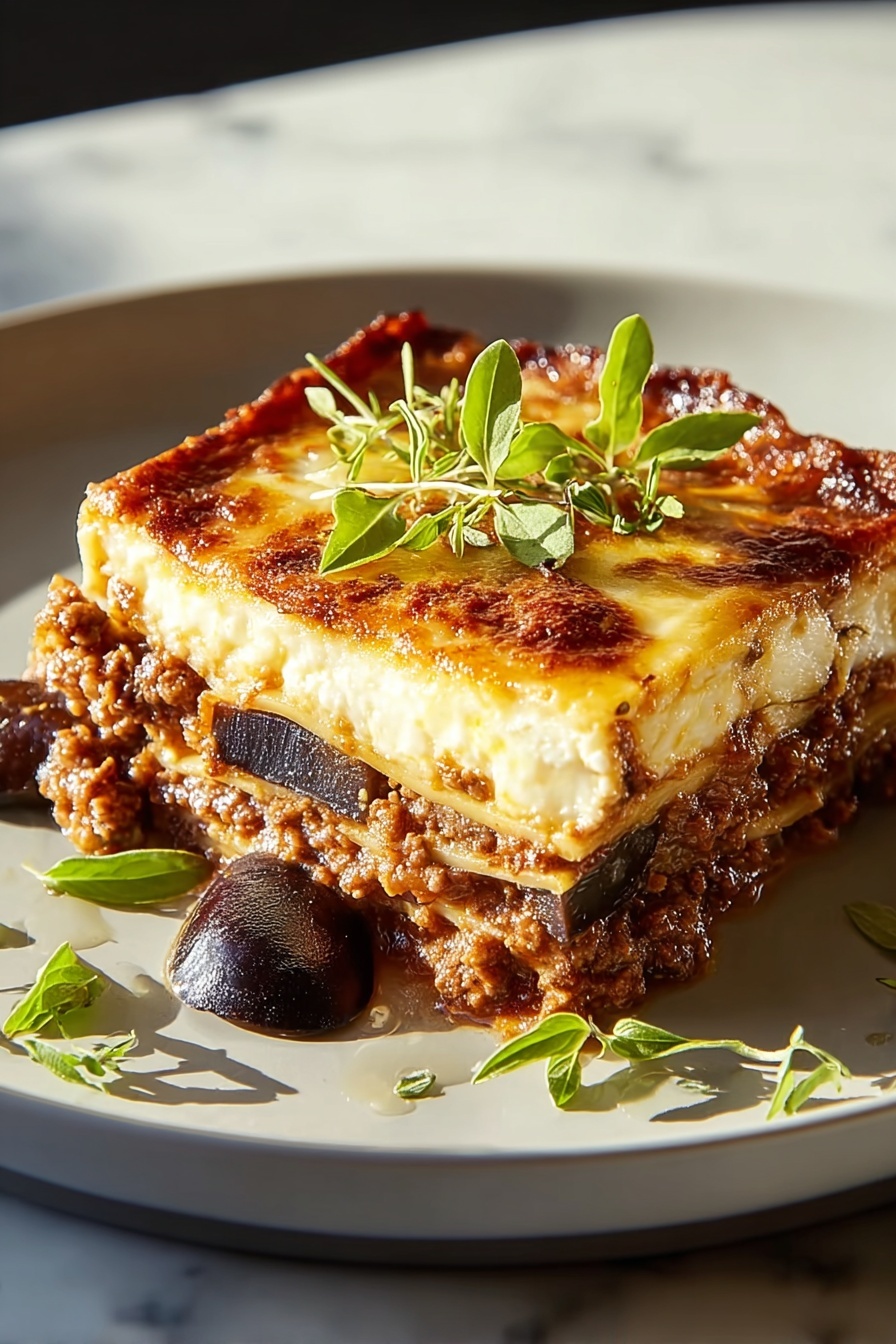
This moussaka is a true labor of love combining tradition and flavor into every bite to delight your family and friends.
Frequently Asked Recipe Questions
- → How should the vegetables be prepared for the layers?
Slice the potatoes, zucchini, and eggplants into even circular disks, then fry in olive oil until cooked through and golden brown. Drain well to remove excess oil before layering.
- → What spices give the meat sauce its distinctive flavor?
The meat sauce incorporates cinnamon, nutmeg, oregano, thyme, bay leaves, and fresh parsley, creating a warm and aromatic foundation.
- → How is the creamy bechamel sauce made for this dish?
Butter and flour are cooked to form a smooth paste, then milk is added gradually while stirring to thicken. Egg yolks, nutmeg, and finely shredded Kefalograviera cheese enrich the sauce before it’s cooked until bubbling and thick.
- → What is the recommended oven temperature and baking time?
Preheat the oven to 165°C (fan-forced) and bake the assembled layers for about 40 minutes until the top turns golden brown. Start checking at 30 minutes to prevent overcooking.
- → Why should the dish rest before slicing and serving?
Allowing the bake to rest for at least 30 minutes helps the layers set and develop deeper flavors, making it easier to cut and enhancing the overall texture.
- → Can the cheeses used be substituted?
Kefalograviera can be replaced with Parmesan, kasseri, or pecorino cheeses to maintain the rich, tangy melt that complements the layers.